

Tactical Gear for Beginners: A Complete Guide
Tactical gear can look complicated when you are just getting started. There are countless backpacks, pouches, belts, vests, boots, flashlights and outdoor accessories on the market, each designed for a slightly different purpose. Without a clear plan, it is easy to purchase equipment that looks useful but does not actually match your needs.
The good news is that building a practical tactical gear setup does not require buying everything at once. A beginner should focus on comfort, durability, organization and real-world usefulness before adding specialized accessories.
This complete guide explains what tactical gear is, how to choose the right equipment and how to build a reliable beginner setup for outdoor activities, travel, work, emergency preparedness and everyday use.
What Is Tactical Gear?
Tactical gear is a broad term used for durable equipment and clothing designed to help people carry, organize, protect and access essential items efficiently.
Although the word “tactical” is often associated with military and law-enforcement equipment, modern tactical gear is also widely used by:
- Campers and hikers
- Hunters
- Airsoft players
- Outdoor workers
- Security personnel
- Travelers
- Emergency preparedness enthusiasts
- Search-and-rescue volunteers
- Everyday carry enthusiasts
A tactical product is generally designed to be durable, practical and adaptable. It may feature reinforced stitching, weather-resistant materials, modular attachment points, multiple compartments or adjustable components.
However, a product does not automatically become useful simply because it is labeled “tactical.” The most important question is whether the item solves a real problem for your intended activity.
Define Your Purpose Before Buying Tactical Gear
The best tactical setup depends on where, why and how often you plan to use it.
A lightweight everyday backpack will be very different from a pack designed for a three-day camping trip. Similarly, someone building an emergency kit will need different equipment from an airsoft player or outdoor worker.
Before purchasing anything, ask yourself the following questions:
- Will I use the equipment every day or occasionally?
- Will I mainly be in urban or outdoor environments?
- How long will I need to carry my equipment?
- What weather conditions should I prepare for?
- Do I need quick access to certain items?
- Will I carry heavy or bulky equipment?
- Do I need modular attachment options?
- What equipment do I already own?
- Which items are genuinely essential?
Defining your purpose prevents unnecessary purchases and helps you build a lighter, more efficient setup.
Start With a Reliable Tactical Backpack
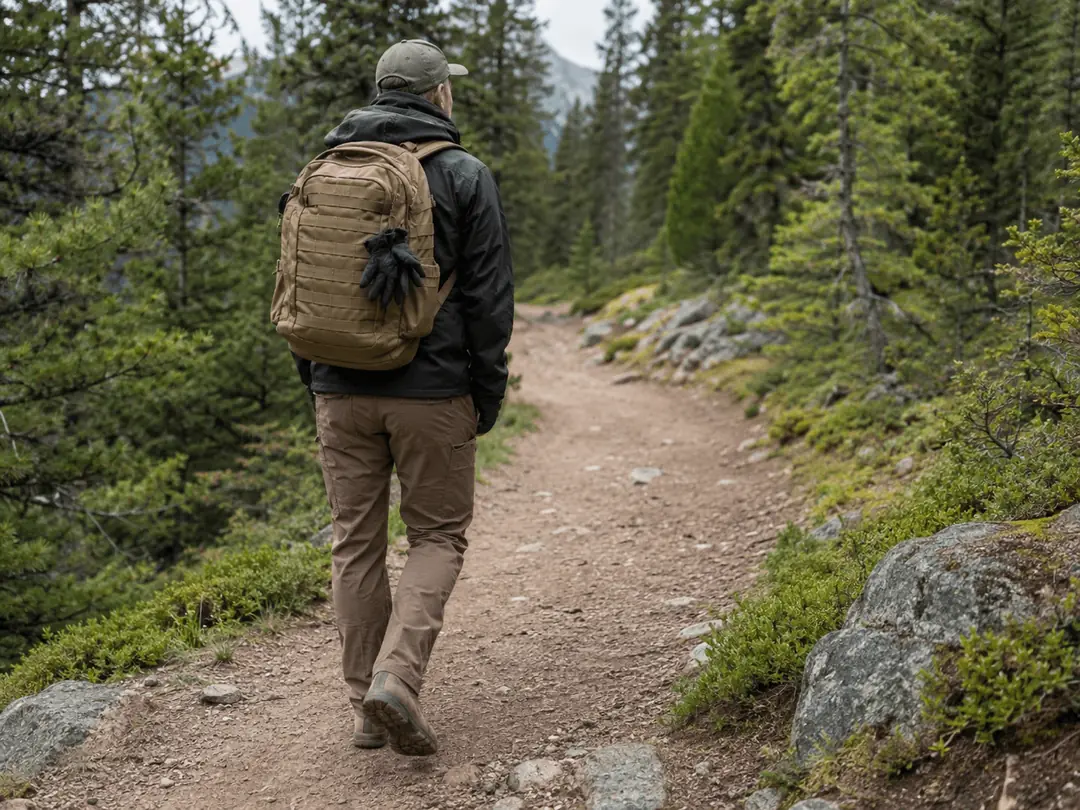
For most beginners, a tactical backpack is the best place to start. It provides a central location for carrying water, clothing, food, tools, electronics and emergency supplies.
The right backpack capacity depends on your activity.
15–25 Liter Tactical Backpacks
Smaller backpacks are suitable for:
- Everyday carry
- Short hikes
- Work or school
- Urban travel
- Gym equipment
- Small emergency kits
These packs are compact and comfortable, but their limited capacity requires careful organization.
25–40 Liter Tactical Backpacks
Medium-sized backpacks are among the most versatile choices for beginners. They can be used for:
- Full-day outdoor activities
- Overnight trips
- Airsoft equipment
- Travel
- Larger emergency kits
- Work-related equipment
A 25–40 liter pack usually offers enough space for essentials without becoming excessively heavy.
40–60 Liter Tactical Backpacks
Larger packs are better suited for:
- Multi-day camping
- Extended outdoor trips
- Cold-weather clothing
- Group equipment
- Bulky sleeping systems
- Specialized professional use
Large backpacks should have a supportive hip belt, adjustable shoulder straps and a properly fitted back panel. A large pack that does not fit correctly may become uncomfortable even when it is not fully loaded.
When choosing a tactical backpack, look for:
- Reinforced stitching
- Durable zippers
- Adjustable shoulder straps
- A sternum strap
- A supportive hip belt for heavier loads
- Multiple compartments
- Internal organization
- Compression straps
- Hydration compatibility
- Weather-resistant fabric
- MOLLE-compatible webbing
Do not choose a pack based only on its appearance. Comfort and fit are more important than the number of external straps or pockets.
Understand MOLLE and Modular Equipment
MOLLE stands for Modular Lightweight Load-Carrying Equipment. The system was developed to allow compatible pouches and accessories to be attached to load-carrying equipment such as backpacks, belts and vests. The official military system includes modular rucksacks and specialized load-carrying components.
Most commercial tactical backpacks use rows of webbing based on the PALS attachment pattern. These webbing rows allow users to add or remove compatible accessories.
Common MOLLE-compatible accessories include:
- Utility pouches
- Bottle holders
- First-aid pouches
- Radio pouches
- Tool holders
- Flashlight pouches
- Organizer panels
- Small accessory bags
MOLLE is useful because it lets you customize your setup. However, beginners often attach too many pouches to the outside of their backpacks.
External pouches can make important equipment easier to access, but they also add weight and bulk. Start with the main backpack compartments and add external pouches only when they serve a clear purpose.
Choose Tactical Clothing for Comfort and Function
Tactical clothing should allow freedom of movement while providing protection against weather, abrasion and demanding environments.
A beginner does not need a complete military-style uniform. Start with versatile clothing that suits your activity and climate.
Tactical Pants
Good tactical pants commonly include:
- Reinforced knees and seat areas
- Multiple functional pockets
- Flexible fabric panels
- Durable belt loops
- Strong stitching
- Quick-drying materials
- Adjustable waist or ankle areas
Pocket placement is important. Carrying too many heavy objects in trouser pockets can restrict movement and become uncomfortable over time.
Tactical Shirts
Tactical shirts may be designed for outdoor work, warm weather or use beneath load-carrying equipment.
Depending on your needs, look for:
- Breathable fabric
- Quick-drying performance
- Reinforced sleeves
- Ventilation areas
- Secure pockets
- Comfortable seams
- Sun protection
- Moisture management
Cotton may feel comfortable in mild conditions, but it absorbs moisture and dries slowly. Synthetic fabrics and performance blends are often more practical for active outdoor use.
Layering for Changing Conditions
Instead of relying on one heavy garment, use a layering system:
- Base layer: Helps manage moisture next to the skin.
- Mid layer: Provides insulation and warmth.
- Outer layer: Protects against wind, rain or snow.
Layering allows you to adjust your clothing as the temperature and activity level change.
Invest in Proper Footwear
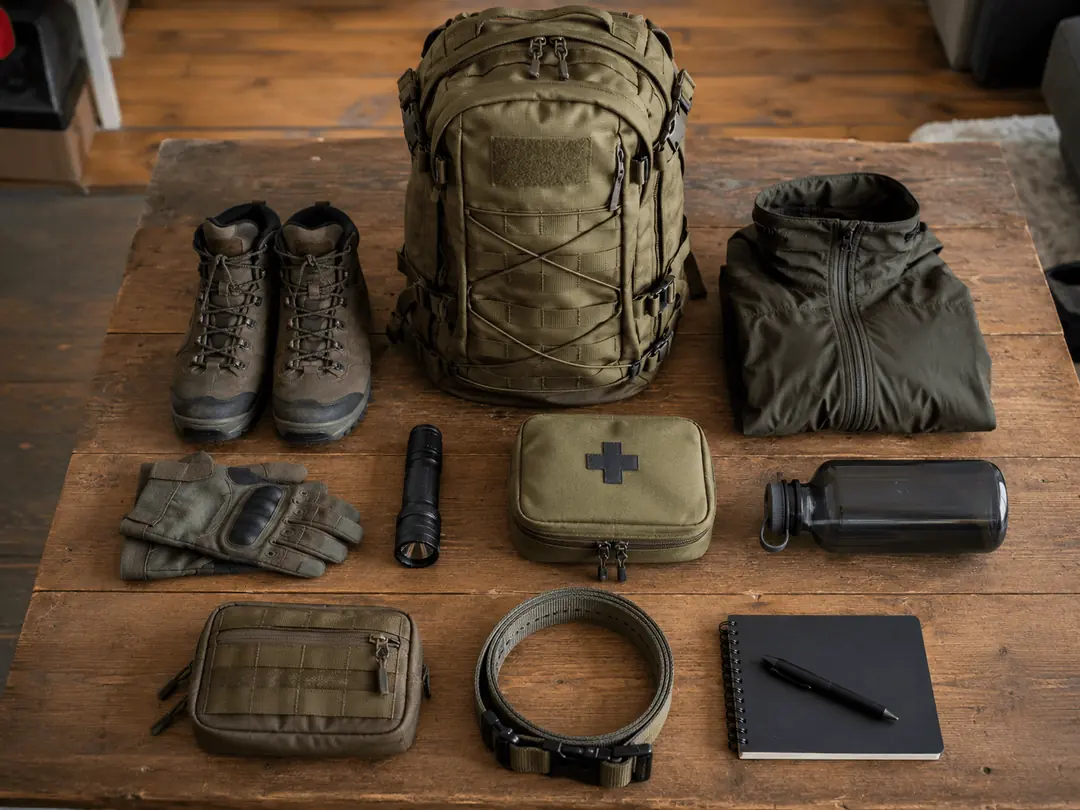
Footwear is one of the most important parts of any outdoor or tactical setup. Poorly fitted boots can cause discomfort, blisters and reduced mobility.
Choose footwear based on the terrain rather than appearance.
Lightweight tactical shoes may be suitable for:
- Urban environments
- Indoor work
- Warm weather
- Short outdoor activities
- Everyday use
Mid-height or high-cut boots may provide better support for:
- Uneven ground
- Long hikes
- Wet or muddy terrain
- Carrying heavier loads
- Cold-weather conditions
When selecting tactical boots, consider:
- Correct sizing
- Toe space
- Ankle support
- Sole grip
- Water resistance
- Breathability
- Overall weight
- Break-in time
- Compatibility with your socks
Try boots with the type of socks you intend to wear. A boot that feels comfortable with thin everyday socks may become too tight with thicker outdoor socks.
Do not wear brand-new boots for the first time on a long trip. Break them in gradually and check for pressure points.
Use a Tactical Belt for Frequently Accessed Equipment
A tactical belt can help carry small tools and essential equipment without filling your pockets or backpack.
Beginner belt setups should remain simple. Possible belt-mounted items include:
- A compact utility pouch
- Flashlight
- Gloves
- Multi-purpose tool
- Small first-aid pouch
- Water bottle holder
- Work-related accessories
The belt should fit securely without limiting movement. Equipment should not swing, shift or create uncomfortable pressure when walking, sitting or bending.
Avoid adding equipment simply because there is empty space on the belt. Every item should have a purpose and a consistent location.
Tactical Vest or Plate Carrier: Do You Need One?
Tactical vests and plate carriers are often among the first products that attract beginners, but they are not necessary for every activity.
A tactical vest may provide:
- Additional storage
- Quick access to equipment
- Modular pouch placement
- Balanced load distribution
- A realistic setup for airsoft or training activities
A plate carrier is specifically designed to hold compatible protective plates. An empty plate carrier does not provide ballistic protection, and not every carrier or insert offers the same protection level.
For camping, hiking or general emergency preparedness, a backpack and belt are usually more practical than a plate carrier. A vest becomes useful when you need frequent access to specific equipment without removing your backpack.
Always review local laws and regulations before purchasing, carrying or using protective equipment or restricted accessories.
Build a Basic Emergency and First-Aid Kit
Tactical equipment should improve preparedness rather than simply create a certain appearance.
The National Park Service recommends carrying essential systems for navigation, sun protection, insulation, illumination, first aid, fire, repair, nutrition, hydration and emergency shelter during outdoor activities. It also emphasizes that additional equipment may be needed depending on the location and activity.
A basic outdoor or emergency kit may include:
- First-aid supplies
- Personal medication
- Drinking water
- Water treatment method
- Non-perishable food
- Flashlight or headlamp
- Spare batteries
- Emergency blanket
- Rain protection
- Whistle
- Map and compass
- Fire-starting equipment where legal and appropriate
- Multi-purpose tool
- Charging cable or power bank
- Personal identification
- Emergency contact information
The American Red Cross also recommends keeping emergency supplies in an easy-to-carry kit that can be used at home or taken during an evacuation. Its basic recommendations include water, food, lighting, a radio, batteries, first-aid supplies, medication, hygiene items and copies of important documents.
A first-aid kit is only useful when you know what it contains and how to use it. Check it regularly and replace expired, damaged or missing supplies. Include personal medication and emergency information relevant to you.
Select a Dependable Flashlight or Headlamp
Reliable lighting is essential for outdoor activities, vehicle emergencies, power outages and night work.
A headlamp keeps both hands free, making it useful for:
- Setting up camp
- Following a trail
- Repairing equipment
- Reading maps
- Organizing a backpack
- Responding to an emergency
A handheld flashlight may offer better directional control and can be easier to use for inspection tasks.
Consider the following features:
- Multiple brightness settings
- Practical battery life
- Water resistance
- Impact resistance
- Simple controls
- Common battery type
- Rechargeable capability
- Low-power mode
- Lockout mode to prevent accidental activation
Extremely high brightness is not always necessary. A lower setting often provides enough light while preserving battery power.
Plan Your Hydration System
Water should be one of the first considerations when packing.
Common hydration options include:
- Reusable water bottles
- Collapsible bottles
- Hydration reservoirs
- Insulated containers
- Portable water filters
- Water purification products
Hydration reservoirs allow users to drink while moving, but they can be more difficult to inspect and clean than standard bottles. Bottles are simple, durable and make it easier to monitor how much water remains.
For outdoor trips, do not assume that natural water is safe to drink. Research available water sources and carry an appropriate treatment method.
The amount of water required depends on temperature, activity level, duration and individual needs. Hot weather and physical activity increase hydration requirements, so plan your supply before leaving.
Learn About Common Tactical Gear Materials
Materials influence the weight, durability, weather resistance and price of tactical products.
Nylon
Nylon is widely used in backpacks, pouches and outdoor equipment because it can provide a useful balance of strength, flexibility and weight.
Polyester
Polyester is common in affordable tactical products. It generally handles moisture well and can be suitable for everyday use, although performance depends heavily on fabric construction and quality.
Ripstop Fabric
Ripstop fabric is woven with reinforced threads that help limit the spread of small tears. It may be made from nylon, polyester or a blend of materials.
Ripstop does not mean that the fabric is impossible to damage. It simply improves resistance to tearing and helps prevent minor damage from spreading quickly.
Water-Resistant vs Waterproof
These terms should not be used interchangeably.
- Water-resistant: Can handle light moisture or brief exposure.
- Water-repellent: Has a surface treatment that helps water bead and roll away.
- Waterproof: Designed to prevent water penetration under specified conditions.
Even a weather-resistant backpack may allow water to enter through zippers, seams or openings. Use internal dry bags or waterproof organizers for sensitive items such as electronics, documents and spare clothing.
Organize Your Tactical Backpack Properly
A well-organized backpack is more useful than a larger, poorly packed one.
Use these basic packing principles:
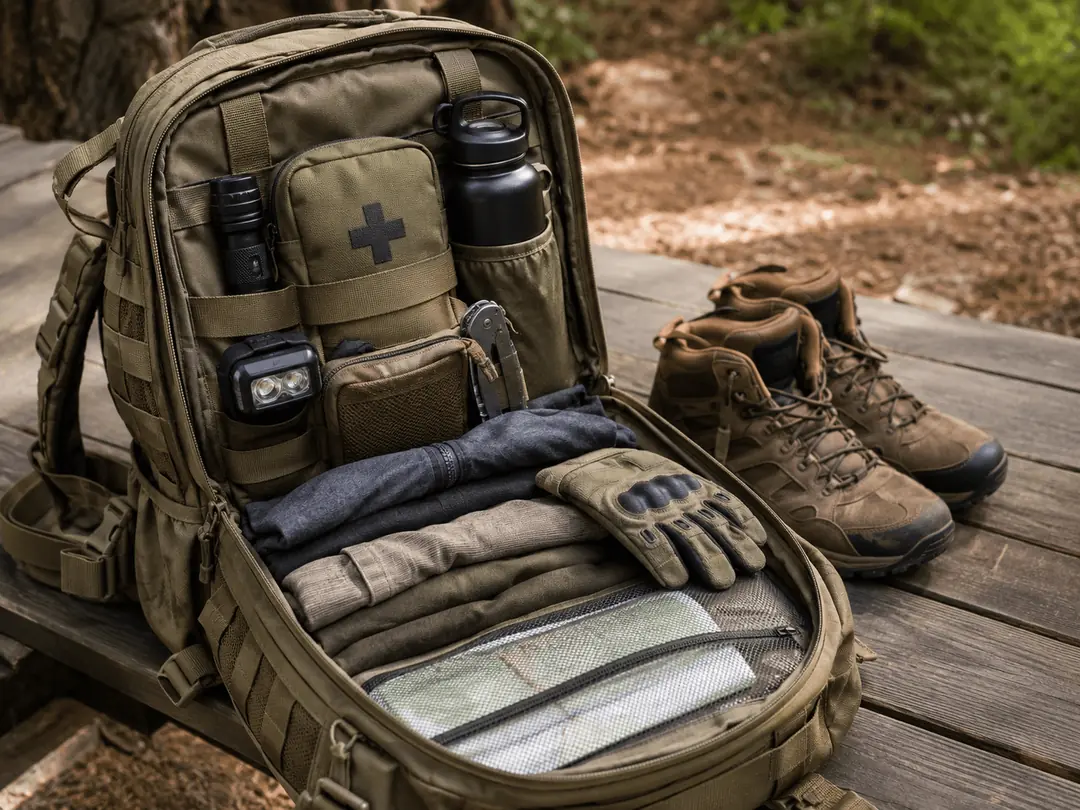
- Place heavier items close to your back.
- Keep frequently used items easy to reach.
- Separate wet, dirty or leaking items.
- Protect electronics and documents from moisture.
- Group similar items together.
- Use small organizers instead of loose equipment.
- Avoid attaching heavy items far from your body.
- Balance the left and right sides of the pack.
- Tighten compression straps after packing.
- Leave a small amount of free space for unexpected needs.
You should be able to locate essential equipment without emptying the entire backpack.
Consider assigning consistent locations for important items. For example, always keep first-aid supplies in the same marked compartment and your flashlight in the same outer pocket.
A Simple Beginner Tactical Gear Checklist
A practical starter setup may include:
- 20–40 liter tactical backpack
- Comfortable tactical or outdoor pants
- Weather-appropriate upper layers
- Properly fitted footwear
- Quality socks
- Reusable water bottle
- Compact first-aid kit
- Flashlight or headlamp
- Multi-purpose tool
- Work gloves
- Rain protection
- Emergency whistle
- Small organizer pouch
- Portable power bank
- Personal medication
- Navigation tools appropriate for the activity
This list should be adjusted according to your environment. A person preparing for urban emergencies will not need exactly the same equipment as someone camping in cold and remote terrain.
Common Tactical Gear Mistakes Beginners Make
Buying Too Much Equipment
More equipment does not automatically create a better setup. Extra items increase weight, take up space and make organization more difficult.
Choosing Appearance Over Function
Camouflage patterns, straps and pouches may look impressive, but comfort and reliability matter more.
Ignoring Fit
Backpacks, boots, belts and clothing should fit properly. Poor fit can make even high-quality equipment difficult to use.
Carrying Equipment Without Training
Owning a compass, first-aid kit or water filter is not enough. Learn how to use your equipment before depending on it.
Overloading MOLLE Webbing
Attaching too many pouches makes a backpack bulky and may cause it to catch on branches, doors or other obstacles.
Ignoring Local Regulations
Rules concerning knives, defensive equipment, communication devices, uniforms and protective equipment vary by country and region. Check applicable laws before carrying specialized items.
Failing to Test the Setup
Wear your backpack, walk with it and use your equipment before taking it on a serious trip. Testing reveals uncomfortable straps, poor weight distribution and missing supplies.
How to Maintain Tactical Gear
Regular maintenance helps equipment last longer and remain dependable.
After use:
- Empty every compartment.
- Remove dirt, sand and debris.
- Allow wet equipment to dry fully.
- Inspect seams and straps.
- Check buckles and zippers.
- Remove batteries from rarely used electronics.
- Clean hydration reservoirs.
- Replace expired first-aid supplies.
- Store equipment away from direct sunlight and moisture.
Follow the manufacturer’s cleaning instructions. Strong detergents, bleach, high heat and machine drying may damage coatings, adhesives or technical fabrics.
The U.S. Army has also emphasized proper cleaning and maintenance procedures for personal protective and load-carrying equipment, including MOLLE systems.
Frequently Asked Questions About Tactical Gear
What tactical gear should a beginner buy first?
Start with a comfortable backpack, suitable clothing, reliable footwear, a flashlight, water storage and a basic first-aid kit. Add specialized pouches, belts or vests only after identifying a genuine need.
What size tactical backpack is best for beginners?
A 25–40 liter backpack is a versatile option for many beginners. It can provide enough space for day trips, travel, emergency supplies and light overnight use without becoming excessively large.
Is tactical gear only for military use?
No. Tactical gear is used by campers, hikers, travelers, outdoor workers, airsoft players, security professionals and people building emergency preparedness kits.
What is the difference between tactical and outdoor gear?
The categories often overlap. Tactical equipment usually emphasizes durability, modular organization and quick access. Traditional outdoor equipment may focus more heavily on low weight, long-distance comfort and activity-specific performance.
Do I need a tactical vest?
Not necessarily. A vest may be useful when you need immediate access to several items, but a backpack is usually more versatile for beginners.
Is MOLLE necessary on a tactical backpack?
MOLLE is useful for customization, but it is not essential for every user. Internal organization and backpack comfort may be more important than external attachment space.
Are tactical backpacks waterproof?
Some tactical backpacks are water-resistant, but many are not fully waterproof. Use waterproof internal organizers or dry bags for items that must remain dry.
What color tactical gear should I choose?
Choose a color based on your environment and intended use. Black and gray are common for urban use, while green, brown and earth tones are popular for outdoor activities. High-visibility equipment may be more appropriate for emergency or rescue situations.
How heavy should my tactical backpack be?
The ideal weight depends on your fitness, body size, activity and terrain. Carry only what you need, distribute the load properly and test the backpack before longer use.
How often should I inspect my tactical gear?
Inspect frequently used gear after every demanding activity. Emergency equipment and stored kits should also be reviewed periodically for expired supplies, battery condition, moisture damage and missing items.
Final Thoughts
The best tactical gear setup is not the largest, most expensive or most complicated one. It is the setup that matches your activity, fits comfortably and contains equipment you understand how to use.
Beginners should start with the basics, test every item and make gradual improvements based on real experience. Prioritize water, lighting, first aid, suitable clothing, dependable footwear and organized storage before purchasing specialized accessories.
As your needs become clearer, you can add modular pouches, tactical belts, protective clothing and other equipment without creating unnecessary weight or complexity.
Explore the tactical and outdoor gear collections at AskerMarketi to find practical equipment for everyday use, outdoor activities, travel and emergency preparedness.